"Pantelleria is an island of farmers, not sailors. The island is volcanic in nature
with a landscape that speaks of toil, the effort to carve out of the mountain small parcels of land. Farmer have to construct dry-stone walls and gardens with high walls to protect as little as a single tree from the fury of the wind. Citrus trees, olives, capers, Zibibbo grapes: Pantelleria is a temple erected by men in honor of Mother Nature. And only those who treat it with religious respect succeed in securing the most precious fruits. For Donnafugata, however,Pantelleria is also an ecosystem to be preserved and promoted in company with institutions, residents and environmental associations. It is a heritage to be handed on, with its colors and aromas intact, to future generations.
Viticultural contexts on Pantelleria are multiple and multifactorial. At the base of the viticultural diversity is the fact that the vineyards are scattered out among the various small communities. Wind and exposition produce the greatest differences, whether in terms of the quality or quantity of the product, between one microzone and another. The age of the vines, ranging from 20 to 100 years, is another differentiating factor of great importance - on the same level as the soil - climatic situation.
The natural process of drying the grapes on grates in the sun and wind requires three-four weeks. The objective is the concentration of sugars and aromas. In September, following a second harvest, must is pressed from extremely ripe fresh grapes to which are added many times during fermentation dried grapes separated from the stalks by hand. During maceration, the raisins yield all their aromas to the must. (Naturally there can be an enormous variation in the amounts and frequencies of these additions, which produce very diverse productions from one producer to another.) Toward the end of November, when a balance between alcohol and sugar and the desired aromatic concentration have been achieved, the temperature is reduced to block fermentation. After several months, the wine thus secured is bottled and it will go on sale on the July 1 of the year following the harvest, as stipulated by the production code for Passito di Pantelleria DOC.
Altitude
From 20 to 300 metres (65 to 984 ft)
Orography
Terraced hills
Soils
Sandy, originating from lava, sub-acidic - neutral reaction. Deep and extremely fertile soils, well endowed with phosphorus, potassium and zinc
Climate
Mild winters with little rainfall. Breezy summers. Average annual rainfall: 450 millimeters. The wind is an important climatic factor for the quality of the grapes but at times, in vintages that are particularly windy, production is zeroed out in some contexts
The vineyards
The vines in depressions are trained in low alberello (head-trained bush), consisting of two to four arms
Planting density
2,500 vines per hectare (1,011 an acre)
Production of grapes
4 tons per hectare (1,62 tons an acre)
Pruning systems
Typically very short. Each of the arms of the vines carries 1 or 2 spurs with 1 to 2 buds each. The number of buds per vine averages between 6 and 10.
White grapes
The prince of aromatic Sicilian varieties: Moscato d’Alessandria, also known as Zibibbo
The rhythms of the countryside
Beginning in mid-November, early pruning is carried out, leaving about 20 buds per vine to fortify the bearing wood. Fertilizer (all organic) character is applied in November and December. In January-February, the terrain is dug and renewal spurs are thinned, completing winter pruning. Budding occurs in March and so does the first damage from the wind. Weeds are cleared out of the depressions. In late April and early May, tipping of the buds is carried out manually to improve setting (the evolution of the flower into the fruit).
The harvest
The harvest in the various districts on the island begins in mid-August. The best clusters are selected and laid down in the sun for drying. The picking of all
the grapes to be used in making Moscato and Passito (raisin wine) begins in September.
"From literature published by the Sicilian vineyards of Donnafugata
Additional details and photographs are available in this download (Adobe PDF) document.....
Development is underway to supply distributors in the United States with selected Passito from Pantelleria. Check back here for news and links to this new project.
Photographs of the four seasons
in the life of Passito.
Photographs of the four seasons
in the life of Passito.
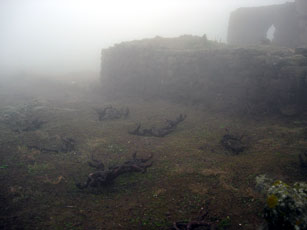
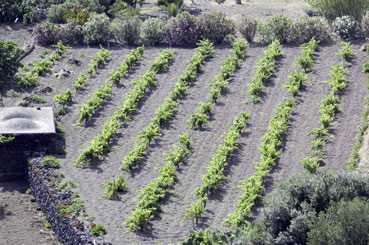
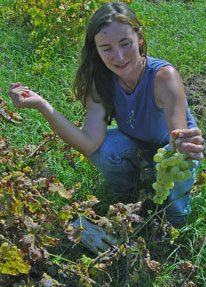
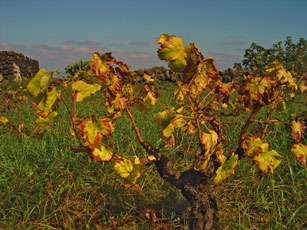
Early Spring, Rainy Day
June 03, 2006
Late September
October
Information (Summary) about the Passito of Pantelleria
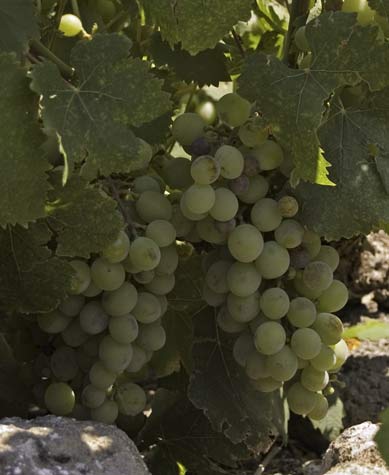
July 27, 2006